For parents of K–4 kids: a calmer evening plan, plus short practice where mistakes earn a clue.
By the Brainy Bucks team · Updated November 2026
Wrong answer? A clue, then another go.
Get Brainy Bucks free · Free on iPhone
Why does my child cry over math homework?
Often it's the moment of being wrong in front of someone, at the end of a long day, not the math itself. Tears tend to come right after a mistake. A calmer adult, a shorter session and a way to retry without losing face usually help more than another explanation.
That isn't just reassuring talk. In a 2015 study in Psychological Science, researchers followed 438 first and second graders across a school year. Children of math-anxious parents learned less math and grew more anxious about it, but only when those parents helped with math homework often. Reading scores weren't affected. The lesson for us as parents isn't "stop helping". It's that how we help carries over to the child.
Below is one ordinary evening, minute by minute, and where it could turn.
A math homework meltdown, minute by minute
The worksheet comes out
Twenty addition problems, after school, after a snack that didn't quite land. Your child is already tired.
Problem 6 goes wrong
9 + 7 = 15. You say "not quite", gently. They hear "wrong" and the pencil stops.
The tears
You explain again, faster. They cry, you feel your own jaw tighten. That tension is what the 2015 study points at.
The reset
Stop. Water, a short break, then one problem only, with a clue instead of the answer: "What's 9 + 1?" They get 10, then 16.
Finish small
Two more problems, then done. Write a note to the teacher about the rest. Tomorrow starts on a win, not a fight.
The fix is rarely a better explanation. It's a smaller, kinder second try.
Short daily math practice, in the app
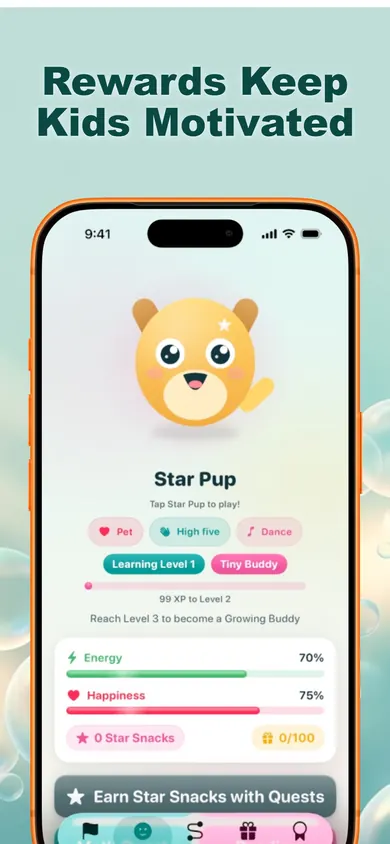
We built Brainy Bucks around that second try. It doesn't do homework, and it doesn't follow your school's worksheet. It's a short daily quest of math, reading and phonics that your child plays away from the homework table, so practice and stress stop being the same thing.
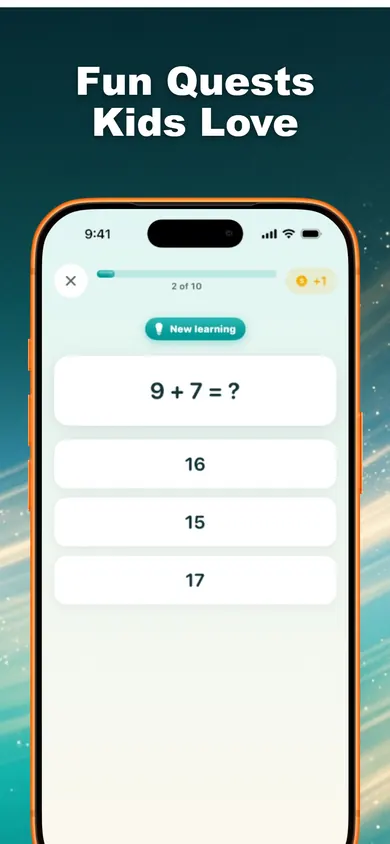
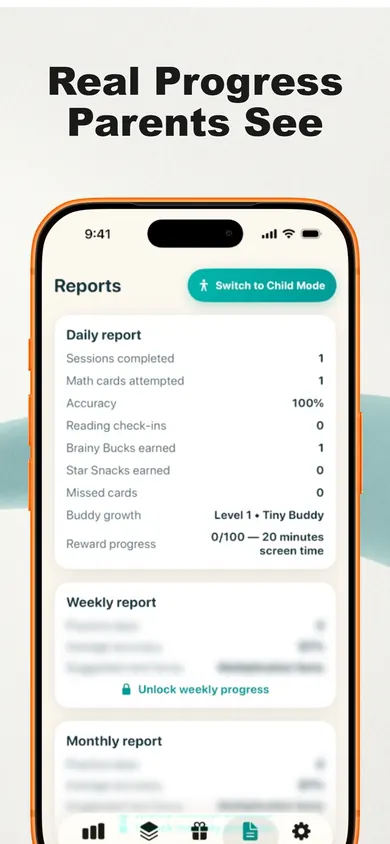
A quest card: new skills, review and earlier mistakesA Brain Buddy that grows as they learnWhat parents see, behind a PIN
How a calmer practice routine works
1
Pick 5, 10 or 15 minutes
Today's Quest mixes new skills, review and earlier mistakes. One adaptive quest is free every day, with no time limit. Short matters: the U.S. Institute of Education Sciences' 2007 practice guide recommends spacing practice over time and using quizzes with feedback, rating the quizzing evidence "strong".
2
Mistakes become comebacks
No lives lost and no red X. A wrong answer gets a clue and a second try. Missed questions return in later quests, and skills that went well are checked again days later. Tap the speaker to hear any question read aloud, offline.
3
You read one sentence
A one-sentence weekly summary, plain skill statuses (Introduced, Practicing, Consistent, Retained, Needs review) and up to three short suggestions in This Week's Learning Plan, each with the reason, time and how to start.
Same skills, different room, no audience: that's the design decision.
Questions parents ask about math homework stress
Should I stop helping with math homework?
Not necessarily. The 2015 study found the harm only where math-anxious parents helped often. If math makes you tense, keep helping but change how: stay calm, ask what the question wants, and let the teacher handle the method.
Is Brainy Bucks a replacement for homework?
No. It does not see your child's worksheet or follow a school's lesson order. It is short extra practice, separate from the homework itself.
How long is a quest?
You choose 5, 10 or 15 minutes. One adaptive Today's Quest is free every day with no time limit, plus 3 extra quests a day.
Can my child buy things in the app?
Child Mode shows no prices or purchase buttons. Purchases and settings sit behind a parent PIN, and every reward is earned by practicing.
Try the second-try idea tonight
Here's the pattern in 20 seconds. Pick a wrong answer on purpose and see what happens. Then try the same move at the kitchen table: a clue, not the answer.
8 + 5 = ?
Choose an answer.
Instead of…
Try…
"No, that's wrong."
"Close. Want a clue?"
Explaining the whole method again
One question that gets them halfway
Finishing all 20 tonight
Stopping on a win and telling the teacher
Who should pick something else
Tears happen nearly every night, whatever you try. Talk to your child's teacher first. A practice app can't tell you why math is hard for them, and skill statuses in Brainy Bucks are based only on in-app answers. They are not a formal assessment.
Your child is in Grade 6 to 8. Content spans Pre-K to Grade 8, but the deepest coverage is Kindergarten to Grade 4.
You want practice that matches tonight's worksheet. Brainy Bucks adapts to your child's answers, not to a school's lesson plan.
You're keeping evenings screen-free. The parent area includes screen-free activities you can do together, but the quests themselves are on a phone.
Ten minutes. Zero red Xs.
One free adaptive quest every day, no ads, no accounts. Learning data stays on your device.
Emergency plan for living alone: 7 factsSeven sourced facts for an emergency plan when you live alone: lock-screen Medical ID, a key holder, check-ins, paper copies. Plus a printable card.