Updated November 2026 · For parents · 20-second coin round

How to teach a child to count coins

For parents of 6 to 8 year olds: play one coin round together, then find your child's next step.

Make exactly0¢ / 41¢

Tap coins to drop them in. Hint: start with the biggest value.

Download on the App StoreFree on iPhone

How do you teach a child to count coins?

Teach it in five small stages: name each coin, learn what it is worth, skip count by 5s, 10s and 25s, count a mixed handful starting with the biggest coin, then make an amount from scratch. Use real coins, five minutes at a time, and move on only when a stage feels easy.

In the US Common Core standards, coins arrive in second grade: standard 2.MD.C.8 asks children to "solve word problems involving dollar bills, quarters, dimes, nickels, and pennies, using $ and ¢ symbols appropriately." Many children meet coins earlier at home, which is where the stages below help.

  1. 1
    Name the coinSort a pile by type. Feel the edges: the US Mint's specifications list dimes and quarters with ridged (reeded) edges, pennies and nickels with plain ones.
  2. 2
    Know the valueMatch each coin to its cents. Expect the dime trap (below).
  3. 3
    Skip countCount nickels by 5s, dimes by 10s, quarters by 25s.
  4. 4
    Count on from the biggestLine coins up largest value first: 25, 35, 40, 41.
  5. 5
    Make an amount"Show me 41¢" is harder than "how much is this?" It is the round you just played.

Coins click when each stage feels boring before the next one starts.


Which stage is your child at? Four taps.

Nothing you tap here is saved or sent anywhere.


Why does my child mix up nickels and dimes?

Because the dime is the smallest coin and worth more than the larger nickel and penny. Young children reasonably expect bigger to mean more. The US Mint's measurements, drawn to scale:

Dime 10¢17.91 mm
Penny 1¢19.05 mm
Nickel 5¢21.21 mm
Quarter 25¢24.26 mm

A trick that works: hold up a dime and say "small but mighty, ten cents." Then put two nickels next to it and trade. Trading makes value visible in a way that size never will.

CoinWorthEdgeSay it
Penny1¢Plain"The copper one"
Nickel5¢Plain"Fat and smooth"
Dime10¢Ridged"Small but mighty"
Quarter25¢Ridged"Four make a dollar"

What about the penny? The US Mint struck its last circulating pennies on November 12, 2025, CoinNews reported, and the penny remains legal tender. Some stores now round cash totals to the nearest 5¢. Pennies are still in the standard and in jars at home, so keep them in practice.

The dime is small but mighty: teach value by trading, not by size.


A Tuesday at the kitchen table

Picture a 7-year-old with a jar of change and a toy that costs 85¢. She grabs the biggest coins first: three nickels and a penny, because they look like the most. "That's loads," she says. It is 16¢.

So you play stage 4 instead of arguing: quarters in one row, then dimes, nickels, pennies. Count on together: 25, 50, 75, 85. Then the trade: one dime for two nickels. Five minutes, and the dime stops being "the little one."

The next morning, the same skill turns up in a short practice quest, read aloud if she wants it, with a clue and a second try if she misses.
Ways to practice counting money, compared

Real coins at homeBest for touch, trading and edges. Needs you there, and a jar of change.
WorksheetsGood for the 2.MD.C.8 word problems. Pictures of coins can be hard to tell apart in print.
Brainy Bucks (ours)Money is one of 16 math strands in a short daily quest that adapts to answers. Not a coin-only app.

We make Brainy Bucks. Who should pick something else: if your child only needs coin drills for a few weeks, real coins plus a worksheet will do the job for free.


What parents see in Brainy Bucks

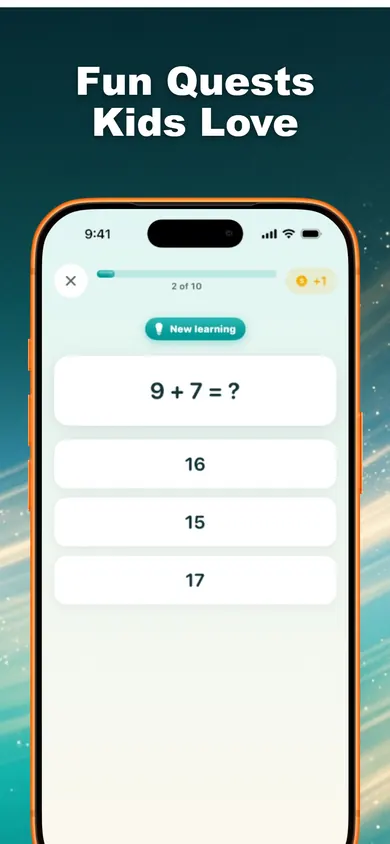
Brainy Bucks question screen asking 9 + 7 with three answer choices12
  • 1One question at a time inside a 5, 10 or 15 minute quest that mixes new skills, review and earlier mistakes.
  • 2No red X: a wrong answer gets a clue and a second try. Tap the speaker to hear any question read aloud, offline.
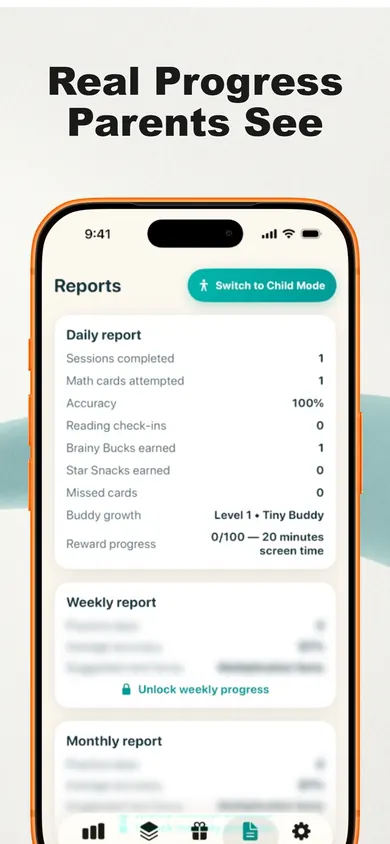
Brainy Bucks parent report with daily and weekly sections34
  • 3A plain report of what was practiced, with skill statuses from Introduced to Retained or Needs review.
  • 4A weekly summary and up to three plan suggestions, which you can accept, replace or postpone.
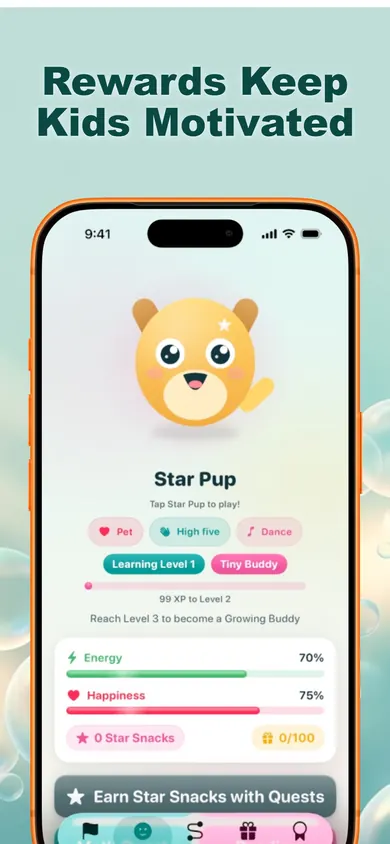
Brainy Bucks Brain Buddy screen showing a growing pet5
  • 5A Brain Buddy grows as they practice. Every reward is earned by practicing; nothing is sold to children, and real-life rewards you price are redeemed only with your parent PIN.

How to start tonight

  1. Do one coin stage with real change. Use your result from the four taps above. Five minutes, then stop while it's fun.
  2. Add a short daily quest. One adaptive quest is free every day, with no ads and no accounts. Missed questions come back in later quests.
  3. Read the weekly summary. If money shows "Needs review", pick a screen-free activity and play it at the table.

Honest limits: Brainy Bucks statuses come only from answers given in the app and are not a formal assessment. Content spans Pre-K to Grade 8, deepest from Kindergarten to Grade 4. An optional Plus subscription adds unlimited quests and the full library; Child Mode shows no prices. Want to try first? There's a 5-question sample quest in your browser.

Coins at the table. Practice in five minutes.

Short daily quests in math and reading, with a weekly summary for you.

Download on the App StoreStart on your iPhone · Free on iPhone